Universidad de Concepción · Chile · 2 – 4 September 2026

Training on Distributed Acoustic Sensing for earthquake research

A three-day hands-on workshop to build scientific capacity in Chile for DAS technology — from theory to field deployment to data analysis.

Dates Sep 2 – 4, 2026
Location UdeC, Concepción, Chile
Capacity 25 – 40 participants
Fees Free for all

Chile sits at one of the world's most active tectonic boundaries, yet access to distributed acoustic sensing (DAS) expertise and infrastructure remains extremely limited in the country. This workshop directly addresses that gap.

Over three days, participants will move from the fundamentals of fiber-optic sensing through to real field deployment on the UdeC campus and full data-analysis pipelines — including modern open-source tools and machine learning approaches.

The workshop is designed to democratize knowledge: it is free for all participants, travel scholarships are available, and participation from underrepresented groups, women, and early-career scientists is actively prioritized.

Supported by the SSA Community Grants Program (USD 5,000 award).

3
Full days of training
40
Expected participants
1st
Hands-on DAS training in Chile
$0
Fee for students

Three days, one complete pipeline

From seismic theory to fiber deployment to earthquake products — participants leave with practical skills and a working toolkit.

02
Sep
Day 1 — Scientific overview & seminars
📍 Auditorio CFM · Universidad de Concepción
Invited talks covering DAS theory, fiber sensing fundamentals, and international case studies. National and international speakers will present applications in earthquake analysis, seismic imaging, seismic hazard, and structural monitoring. Space reserved for lightning talks by students and early-career researchers.
DAS theory Applications Invited talks Student talks
03
Sep
Day 2 — Instrumentation & field deployment
📍 UdeC campus · outdoor fiber-optic network
Hands-on experience with the DAS instrument. Participants learn deployment best practices, safety protocols, and logistical considerations, then deploy the fiber-optic cable on campus. Real seismic signals are recorded during the session — data used in Day 3.
Instrumentation Field deployment Data acquisition
04
Sep
Day 3 — Data processing & interpretation
📍 Universidad de Concepción · computer lab
Full workshop: "Introduction to DAS for Seismology." Participants work with DAS data formats, preprocessing pipelines, the DASDAE open environment, and PhaseNet-DAS machine learning tools for phase picking. Group exercises, plenary discussion on future research directions in Chile, and an evening outreach talk open to the public.
Data formats DASDAE PhaseNet-DAS ML picking Public outreach

International experts in fiber sensing

Leading researchers bringing cutting-edge DAS expertise to Chile for the first time.

EW
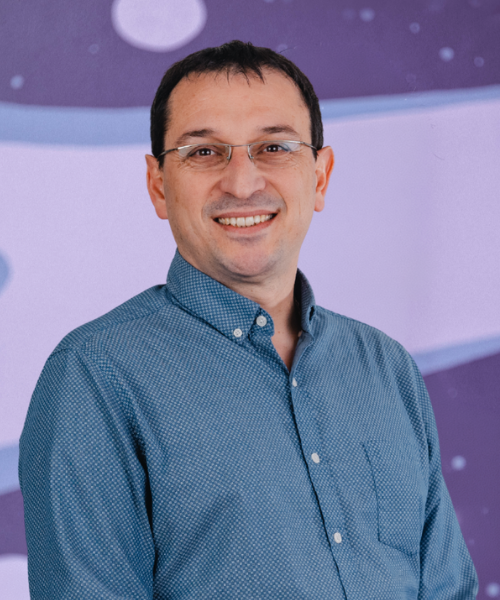
Ethan F. Williams
Main instructor & principal speaker
Assistant Professor, Earth & Planetary Sciences · UC Santa Cruz
Applies fiber-optic sensing to seismology, oceanography, and acoustics. Research spans subduction geohazards, ocean–solid Earth interaction, and structural monitoring using DAS. Ph.D. Caltech (2023). GHI Postdoctoral Scholar, University of Washington (2023–2025).
↗ ethanfwilliams.github.io
EB
Ettore Biondi
Invited speaker
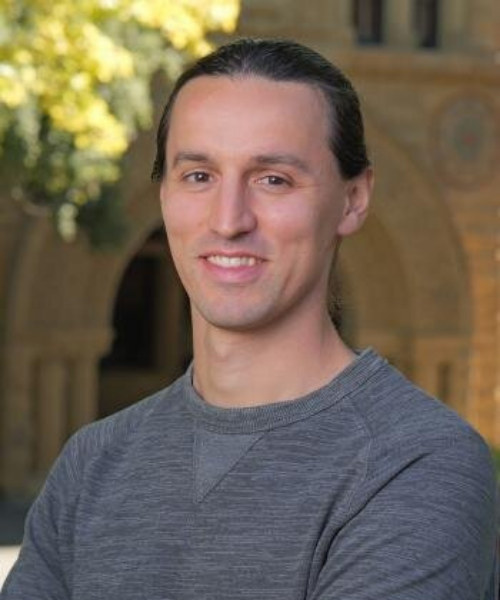
Assistant Professor of Geophysics · Stanford University
Research centers on fiber sensing and dense seismic arrays for geophysical applications — from volcanic system dynamics and earthquake physics to early warning systems and climate-related environmental sensing. Ph.D. Stanford (2021).
↗ Stanford profile

Meet the team

Researchers from Universidad de Concepción and UC Santa Cruz.

CM
Catalina Morales-Yáñez
Assistant Professor
Universidad de Concepción
Lead organizer
JO
Javier Ojeda
Postdoctoral Researcher
Universidad de Concepción
Scientific coordination
EW
Ethan Williams
Assistant Professor
UC Santa Cruz
International coord.
GM
Gonzalo Montalva
Full Professor
Universidad de Concepción
Local logistics
EB
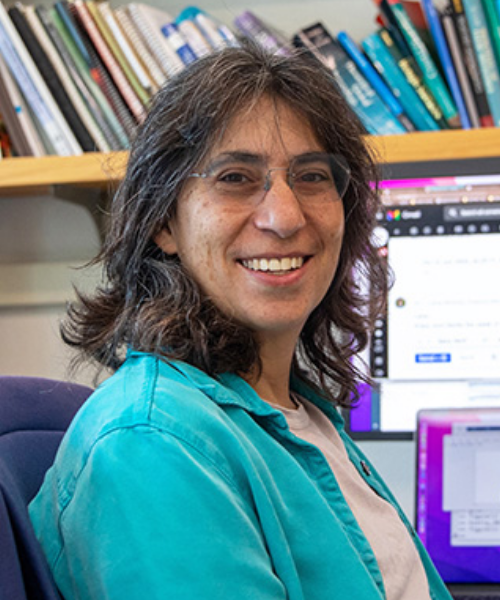
Emily Brodsky
Full Professor
UC Santa Cruz
International coord.

Support for participants

We believe financial barriers shouldn't prevent talented researchers from participating. Limited travel grants are available.

Student & early-career grants

Travel scholarships are available to support participants from outside Concepción — particularly students, early-career scientists, and members of underrepresented groups who lack access to national or other funding sources.

Priority is given to students and first-generation professionals. Workshop fees are fully waived for all students.

USD 100
Maximum grant per recipient (limited budget)
  • Open to students and early-career researchers
  • Priority for participants outside Concepción
  • Priority for underrepresented groups
  • Workshop registration required
  • Limited funds — apply early